
From First Detection to Winter Silence – a Perspective from Inside the Hornet War
For over six months, the fight against yellow-legged hornets on Auckland’s North Shore has been one of the most significant biosecurity responses New Zealand beekeepers have ever faced. Now, with no hornets or nests found since early April, many are asking the same question – have we beaten them, or is winter simply hiding them? For Ken Brown, president of the Auckland Beekeepers Club and one of the early responders, the answer is cautious optimism mixed with realism.
By Eloise Martyn

When Biosecurity New Zealand needed someone who understood both bees and the threat bearing down on them, they turned to Ken Brown. The president of the Auckland Beekeepers Club was among the first contacted when yellow-legged hornet nests (Vespa velutina) were detected on Auckland’s North Shore in November 2025. His expertise opened the door – and what followed kept him there.
“With knowledge about bees and wasps I helped with training in the very beginning,” Brown explains, looking back on a summer like no other.
Since then, he has worked within the organism management side of the response, in what he laughingly refers to as “the kill squad”, with his team destroying 55 nests. His involvement, he says, came down to experience, availability and being based within the affected region.
From the front line, Brown believes there are encouraging signs.

It’s been months – early April – since the last nest was found and destroyed. A few hornets were sighted in the days immediately after, but since then there has been nothing. Importantly, he points out, this was at a “development stage” where teams would normally expect to see hornets actively flying around.

“The teams we have got have developed over time into world class, hunters, tackers and hornet finders. They have looked harder and harder.”
Here’s Hoping
Echoing the words of Biosecurity New Zealand leadership, Brown says he is “cautiously optimistic” about the response and whether New Zealand has managed to get them all, or if winter has simply slowed hornet activity.
“I think we most likely have; but only spring will tell,” the keeper of around 40 beehives says.
For him, one of the most positive signs is that response teams appear to have reached nests before gynes – fertile females capable of starting new colonies – emerged. Still, he stresses that nobody is treating the situation as over.
“We can’t stop looking around the area or New Zealand. We need to be vigilant because, if there are some, we could be in trouble.”

Biosecurity New Zealand’s latest update supports that caution. Despite the lack of nest finds recently, surveillance and monitoring remain ongoing. To date, 77 queen hornets and 132 nests have been destroyed, while members of the public have made more than 17,600 reports of suspected sightings (as at mid-May).
Brown says one of the biggest achievements has been how quickly knowledge developed.
“We have gone from no experience on hornets and no idea how they would adapt to New Zealand or what the situation really looked like to knowledge and skills. With the skills we have, even if a few emerge, it won’t be such a worry.”

Public Awareness
The public response has also played a major role. Brown says one of the hardest parts of the operation has been navigating misinformation and negativity online. He recalls seeing social media comments claiming “it’s too late”, “they don’t know what they are doing”, or “I have had them in my garden for years”. Brown says those involved in the response have been “trying to keep the narrative reliable”.

Equally important, he says, was ensuring people felt comfortable reporting sightings, particularly those genuinely asking “is this a hornet?” and facing mockery online.
“Reporting by members of the public was crucial. It was important to keep the positivity, to encourage people to keep reporting.”
On the ground, he says most interactions were positive, with many people simply unsure how to tell the difference between common paper wasps and a yellow-legged hornet.
The suggestion of introducing a bounty system for hornets was something Brown strongly disagreed with, and he was pleased nothing came of it.
“There were suggestions about a bounty and if you had been part of the engagement, you could see that a bounty would have been negative. I put a hornet suit on, full PPE, before going near them. You wouldn’t want kids around hornets for a bounty.”
The risk is real. Unlike honey bees, hornets can sting multiple times because they do not lose their stinger after attacking, and their sting is extremely painful.

Education Efforts
For members of the Auckland Beekeepers Club and other beekeepers in the area, the hornet response unfolded during what Brown describes as a “mixed” 2025-26 season.
Brown’s 40 hives are spread across different city locations, some inside the affected response zones, requiring extra monitoring and trapping.
“A lot of people outside those zones were also ideally monitoring traps for hawking behaviour,” Brown says, and that club members played roles far beyond simply monitoring hives.
“Getting awareness out there and fielding a lot of questions from other clubs and beekeepers who were seeing if there was any extra information. Giving context around how the life cycle relates to where they were at in response.”
Club members also visited schools, spoke with the public and worked with local media to spread education and awareness about the risks if the hornets became established in New Zealand.

Behind the scenes, Brown highlights what he calls “the unsung, unpaid work done by bee clubs and non-commercial beekeepers” which much of the work has relied on.

“One of my early tasks was recruiting people who knew their way around bees. So, I recruited three students from this year and four from last year, plus bee club members.” Brown explains.
“They were mostly on nest tracing teams, often leading them. One student, Debra Sample, was on the organism management team. Matt Telfer, a tutor, came up from Taranaki to join in on the nest tracing.“
He also credits the wider collaboration behind the response.
“It’s not just 100 people from MPI (Ministry for Primary industries). MPI is with experts getting advice from all around New Zealand. They had people who knew about Vespex, wasps, bush craft, trapping – anything they have needed they have brought people in who know about it.”

Money Well Spent
The Government has committed $12 million to the response through to 30 June 2026, with ongoing monthly costs of around $1 million. By January 2026, several million had already been spent, with staffing the largest cost.
For Brown, the scale of the response is justified because the stakes have always been enormous, to both the economy and public safety.
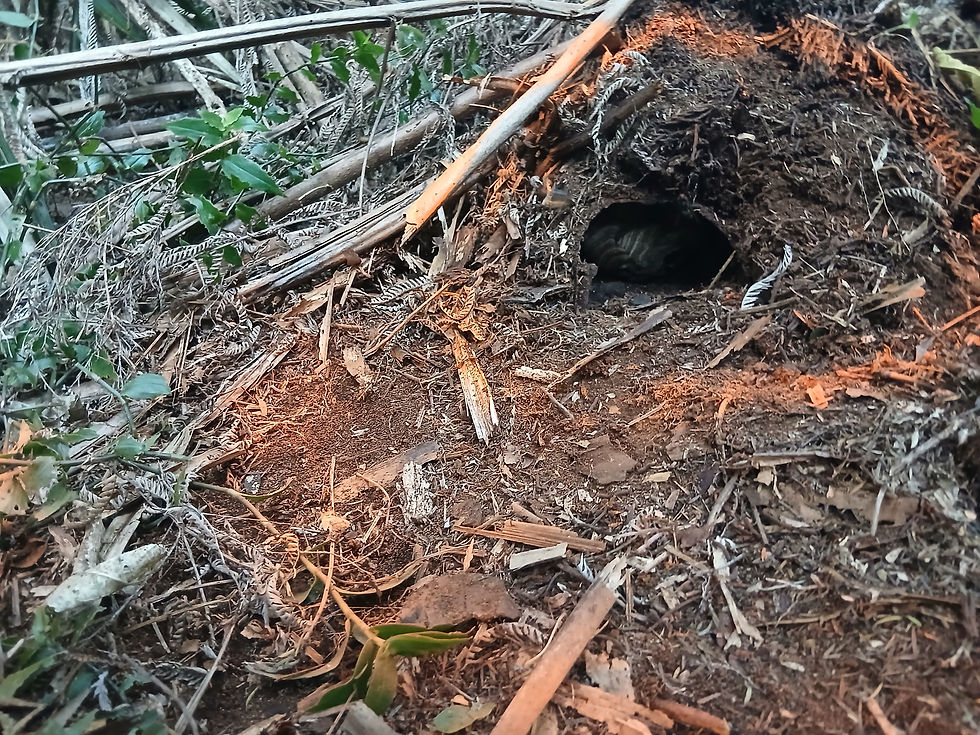
“Think about what wasps have already done in New Zealand – and then consider what these hornets could do to kiwifruit, pasture and farming. It would affect everyone. One nest I helped destroy was right where children were playing. If these hornets became established here, it could change a lot of things in New Zealand.”

For now, the landscape is cold and quiet, with monitoring continuing in the background. Those involved in the response are watching and waiting for spring to reveal whether anything has survived the winter unnoticed.
“This is probably one of the most important things we will do in our lives. If we are lucky and successful, in a few years people will have forgotten just how important it was to stop them now,” Brown concludes.
In the absence of new sightings or nests, there is cautious hope that the silence signals success rather than concealment. In this case, no news is good news.


Comments