
No Retirement Planned for New Zealand's Hardest Working Pollinator
Winter will soon turn to spring and the humble honey bee will once again be called on to pollinate a wide variety of flowers essential to New Zealand’s fruit, vegetable and seed industries. We explore the relationship between growers, bees and beekeepers from the perspective of some of the country’s largest horticultural companies, learning that in a world of constant technological adaptations, honey bees are still hard to beat.
By Eloise Martyn
It might be 2026. Robots are picking fruit in orchards, artificial intelligence is writing reports, and dairy cows are being contained by collars instead of conventional fences. Technology is transforming New Zealand's primary industries in ways that seemed futuristic only a decade ago. Yet when spring arrives and millions of blossoms begin to open, the horticultural sector still relies on a worker that hasn't changed much at all: the honey bee.

For beekeepers, that's reassuring. Despite advances in automation and ongoing research into artificial pollination, growers continue to regard managed honey bee colonies as the cornerstone of successful pollination. Technology may assist the process, but it has yet to match the reliability, efficiency and scale that bees provide naturally.
At a time when beekeepers face challenges such as varroa, rising costs and uncertain honey returns, demand for quality pollination services remains strong.

Pollination at the Heart of Kiwifruit
Nowhere in the country is the importance of honey bee pollination more evident than the Bay of Plenty, the centre of New Zealand’s kiwifruit industry.

Brent McDowell, grower services representative with Trevelyan’s – one of New Zealand’s largest family-owned kiwifruit packhouses and orchard management companies – works with red, gold and green kiwifruit growers across the region. He also brings hands-on experience as a grower, having been raised on a mixed orchard in Paengaroa that has gradually transitioned fully into kiwifruit.
Since joining Trevelyan’s, McDowell says one of his key learnings has been the difference in pollination requirements between green and gold kiwifruit.
“Gold doesn’t need as many bee visits,” he says, noting it is easier to pollinate than green kiwifruit, which reduces overall pollination pressure.
He estimates that green kiwifruit typically requires around 12 hives per hectare, compared with about eight for gold varieties. He also believes green flowers may need around 40 bee visits per flower, while gold generally requires only four to six.
Technology Helps — But Bees Still Finish the Job
Modern kiwifruit pollination combines bee activity with artificial pollen application. Male ‘Chieftain’ flowers are harvested, processed by specialist pollen companies, and stored frozen for use the following season.
This pollen is typically applied through “wet pollination”, where it is mixed with water and sprayed directly onto flowers, rather than using dry pollen and blowers that rely more heavily on bees for distribution.
Despite such advances in pollen technology, McDowell is clear that bees remain unreplaceable.

"Flowering windows are long, sometimes two to three weeks, so timing is important," he says.
"The aim is to wet-apply pollen at full bloom when most flowers are open. However, there are early and late flowers and wet application isn't going to get everything, so bees remain essential. It's not possible to achieve full pollination without them."
In other words, technology can assist pollination, but it cannot yet replace the flexibility and coverage provided by healthy honey bee colonies.

Weather and Hive Placement Matter
For their operation there are two things that impact bee pollination – weather and hive placement, McDowell says.
“Weather plays the biggest part during pollination. We can get rain for a few weeks which impacts pollination. That said, you get one sunny day and all the bees are out and they can get a huge amount done.”
Hive placement has also become an increasing area of focus.
After reviewing 2023 pollination performance, McDowell developed a revised hive placement plan across orchard blocks, which has proven successful.
“We put hives at the southern ends of the blocks, in open areas that get a lot of sun and we seem to have a much better conversion rate. We also split the hives evenly among the blocks instead of bunching them together or chucking then in any place. Apparently, bees come out and fly north, they also need warmth to get them moving in the morning so hive placement for this helps,” McDowell says.

Growers Value Their Beekeepers
The relationship between growers and beekeepers remains central to successful pollination.

McDowell works closely with Kintail Honey, a third-generation family business with around 12,000 hives. He says they are known for supplying strong-quality hives and regularly feeding their bees.
He acknowledges current pressures on beekeepers, including varroa and financial challenges.
“Pollination is a huge part of beekeepers’ income. It’s been tough with mites and finances, so it’s nice to support them,” he says.
While hive prices have gradually increased, McDowell says there is a balance between affordability for growers and viability for beekeepers.
“Pricing is upfront and we are paying per hive. Like everything it increases here and there, but I don’t think the beekeepers are making a huge killing off it. They probably need to charge a bit more to make it really viable, but there is a balance for that cost and it has to be affordable and sustainable.”

Beyond the Kiwifruit Vine
The same message echos in New Zealand's pipfruit sector.
Anna Lambourne, extension manager with New Zealand Apples and Pears Incorporated says managed honey bee pollination is fundamental to the industry's success.
“Honey bees are a critical component of our growing system, with apples relying on insect pollination to set fruit.” Lambourne says.

"Honey bees account for more than 90 percent of flower visits in orchards, making them by far the most important pollinator for the sector. Good pollination is essential to achieving strong fruit set, which directly underpins yield, fruit quality, and overall production outcomes."
Like kiwifruit growers, apple and pear producers are placing greater emphasis on planning and collaboration.
"By planning earlier in the season, growers and beekeepers can work together to develop tailored pollination plans that reflect the specific needs of each orchard."
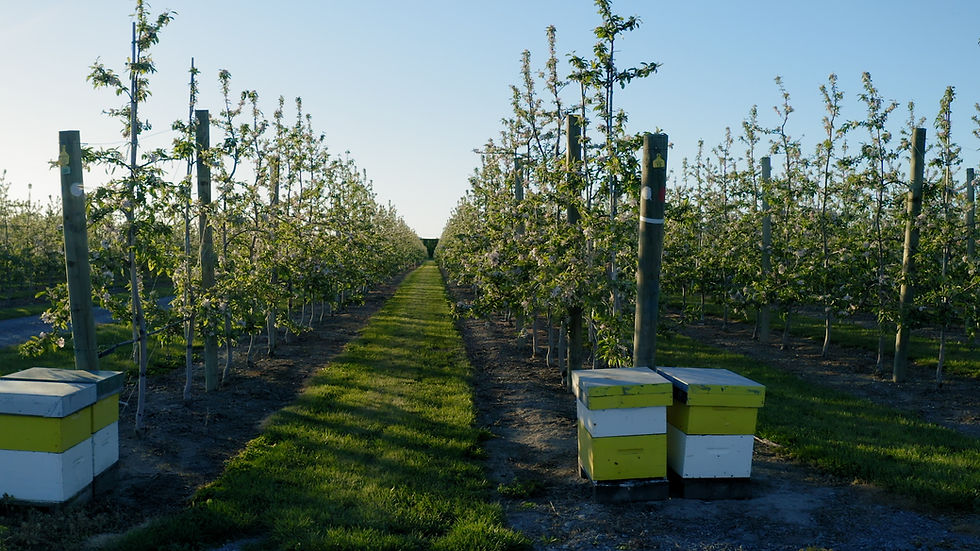
That planning includes decisions around hive numbers, placement, and timing to align with flowering periods. Strong communication between growers and beekeepers helps ensure both healthy bee colonies and effective pollination outcomes.
“Ongoing dialogue is particularly important as the sector continues to grow and evolve. Beekeepers need visibility of future orchard development so they can plan hive numbers and ensure supply keeps pace with demand.” Lambourne says.
She also believes there is still more to learn about pollination itself.
“Questions around bee behaviour in large orchard blocks, the impact of netting, and the effectiveness of different pollinisers will require ongoing collaboration between growers and beekeepers. This is work we need to do together,” she adds.

Seeka Focuses on Long-Term Beekeeper Relationships
At Seeka, New Zealand’s largest kiwifruit growers, pollination manager Hector Pantano says maintaining strong relationships with beekeepers remains a priority as the kiwifruit industry continues to expand.

He believes loyalty has played an important role in the industry's development, particularly through the years when many beekeepers were drawn to the opportunities offered by mānuka honey.
"I believe a lot of this comes down to loyalty. Growers and orchard managers tend to support the beekeepers who have consistently been there for kiwifruit pollination over the years."
To help maintain pollination standards, Seeka uses independent auditors to carry out random hive quality audits across its beekeeping suppliers nationwide. Every beekeeper supplying hives is audited at least twice during the pollination season, Pantano says, with inspections carried out in person and feedback provided directly to the beekeeper.

Pantano says discussions around hive pricing are important, but ultimately growers remain focused on hive quality and pollination performance.
"We are always open to honest and constructive discussions around pricing. However, the key consideration for growers will continue to be hive quality and pollination performance."

Looking Ahead
While technology continues to evolve and companies like Zespri trial self-pollinating kiwifruit varieties, there is no indication that any alternative will replace the honey bee in the near future.
After speaking with growers and industry representatives, there is a clear sense that while innovation is welcome, there is no urgency to replace a system that is already working effectively. Instead, the focus remains on improving efficiency and supporting the existing relationship between bees, beekeepers and growers.



Comments