
Room to Improve – Beekeepers Rally Against Challenging Conditions to Deliver for Kiwifruit Growers, but Failures Do Remain

Despite being thrown some serious challenges in winter and spring 2025, beekeepers servicing New Zealand’s major kiwifruit growing areas appear to have – for the most part – filled their role adequately. It hasn’t been all smooth sailing though, with some disaster stories around hives failing their audits, meaning the proposition of securing enough quality beehives to pollinate the valuable crop in coming seasons should concern growers.
In October Apiarist’s Advocate reported on a shortage of mated queen bees, replacement beehives and how some hives were making their way to the North Island’s major kiwifruit growing areas from as far away as the top of the South Island following harsh winter and spring conditions. Despite the scramble with limited resource, kiwifruit growers appear happy with the service New Zealand beekeepers have provided in a challenging pollination season, while hive auditors are still questioning the practices of some beekeepers.

Last year’s national kiwifruit crop hit record levels at 220.9million trays sold. While early indications are the current season will not reach those lofty levels, they conversely are not expected to drop anywhere near as low as the alarming 164.2million trays moved the year prior.
“This spring we were very concerned about the hive quality and thought we are in for a bad pollination year,” says Hector Pantano, national head of orchard operations for Seeka.
The major packhouse has operations spread from Kerikeri through Coromandel and across Bay of Plenty and Gisborne, managing and leasing approximately 1500ha of red, gold and green kiwifruit.

“Two years ago we did not have a good pollination season and the Hayward (green) kiwifruit resulted in a record small size. Fortunately, the beekeepers did a great job in getting the hives up and running and the pollination season this year went pretty well. It wasn’t as great as the year before, we still had some hive audits fail, but it was nowhere near as bad as two years ago,” Pantano reports.
At fellow kiwifruit packhouse Apata there is 525ha of kiwifruit orchards under management and Apata grow manager Erin Atkinson says they are “pretty comfortable and happy” with the quality of beehives this spring.
“Most of our relationships with beekeepers have been going 20-odd years with our group and you build that relationship where they produce and supply good hives,” Atkinson says.
When they were forced to find replacement hives, it was manageable she says.
“We had a couple of beekeepers who sold their businesses and the new owners couldn’t supply us, due to American foulbrood and varroa mite. We did have a few instances like that, but in those instances you just ring your trusty old beekeepers and ask if they can supply you with more hives. And we didn’t have any trouble getting those hives.”

Red, Gold and Green
Zespri technical consultant Shane Max is as well placed as anybody to get a feel for kiwifruit pollination success and the beekeeper’s role in that, having long acted as a bridge between the two industries.

“There were failures, more than we would like, but it wasn’t catastrophic,” he says of the earlier flowering gold variety.
“However, for some orchards it was and they were running around trying to find hives. It wasn’t as bad as two years ago though, which really put the wind up us, but the winter was very difficult and where the standard is usually pretty easy to meet, many good beekeepers said it was more challenging this year.”
Later into October and November as the Hayward green kiwifruit flowers bloomed, “it really depended on whether you were early or late and the late orchards struggled with some pretty wet weather where pollination was challenging,” Max says.
Many of the hives that are placed in the green kiwifruit orchards are ‘second-drop’, having already gone to work on the gold or red vines around a month earlier. While the packhouses seem happy with early results, Max says there were glaringly obvious differences in bee activity between some orchards he surveyed at random around the Bay of Plenty.
“Where the hives are humming there are bees for Africa through the orchard. Then we went to some others where the hives were alive and there was some activity, but you go into the crops to make rough counts of how many bees you can count per 1000 flowers, and some of them were pretty low.”
Supplementary pollen applications can be, and were, made in these orchards to act as a back-up to the insects’ efforts.
Increased Education & Hive Auditing
This year Zespri placed increased focus on improved communications between kiwifruit growers and beekeepers, with a North Island roadshow of nine get-togethers in August where best-practice management of beehives in kiwifruit pollination was discussed. Outlined there was the ‘Zespri agreed standard’ of beehives entering orchards to have, at minimum, four full-depth frames of brood in all stages and 12 standard frames well covered with bees (approximately 30,000 bees).
Experienced beekeeper Richard Klaus was fronting that roadshow and then undertaking hive assessments in the months following.
“The good beekeepers still have good hives going in, but there was definitely more hives of a lower strength,” Klaus says, adding that they appear to have “worked well” though, possibly due to increased pollen viability.
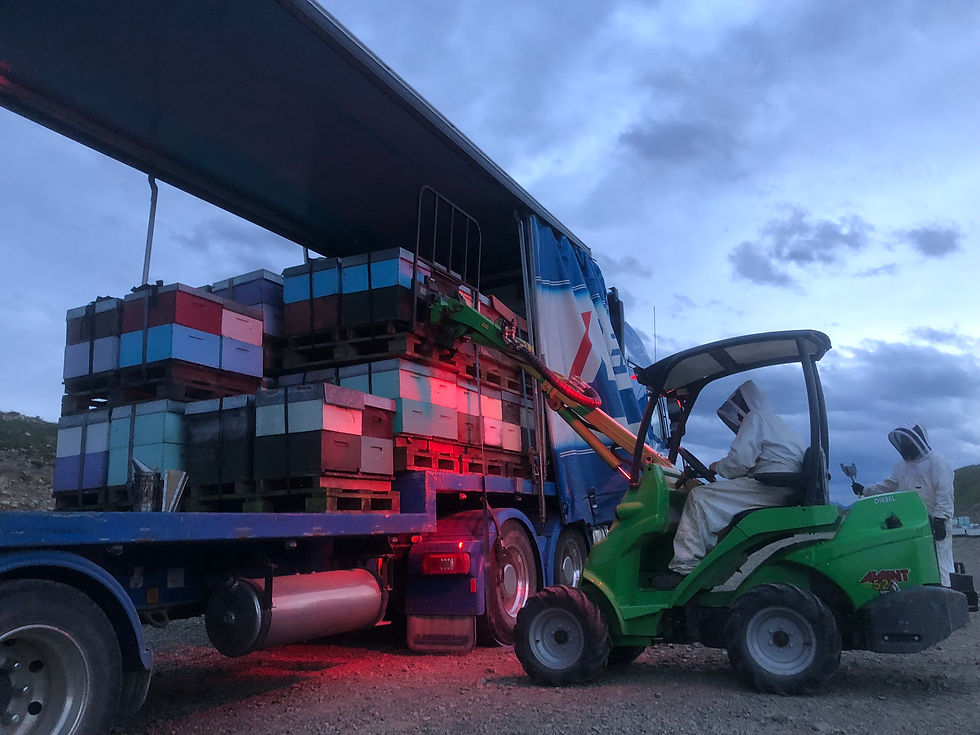
Several of the packhouses or orchard managers task independent auditors with inspecting beehives, including Craig Troughton and his Hive Scout business which assessed hives across more than 100 orchards this spring.
“Most of the hives look healthy enough, but the ones that were weak were just really weak,” Troughton reports.
“The beekeepers had run out of hives, overcommitted, had a bad winter and done nothing to sort it out.”
For one packhouse client Troughton says he assessed 23 different beekeepers. Of those, 14 had failed hives, and eight of those 14 had fail rates of over 50% of their hives.
“These are beekeepers who are used year-in, year-out by this packhouse. The thing which gets me is, there is no mention of anything from the beekeepers to the packhouse. No explaining that it was a wet year, a hard year, cold and horrible for the bees and so a tough build up. The communication was ‘the hives are good, the hives are good’. But, some of them I failed 10 out of 10 hives in an orchard, then the next orchard of theirs was about the same. They were having a shocker this year. The orchardists say ‘they tell us they are really good’, and I have to explain – they are not.”
The total registered beehives in New Zealand continues to decline, now sitting at 488,000 while the area of land growing kiwifruit continues to expand. Knowing that, and two years on from a poor pollination result, Zespri is aware what an imbalance in supply and demand of high-quality honey bee colonies might mean. For that reason, education programmes with beekeepers will continue.

“If we could agree on a standard and make sure it is being met, I don’t think growers will have a problem with paying more. But, no one will be willing to pay more unless they get that surety. That is the five-year education programme we are working through,” Max says.
Introduced this season were trials using infrared heat ‘guns’ to assess hive strength through thermal imagery without opening hives. Around 1500 of Klaus’s own hives were included and he believes it has real potential to assess, and thus improve, the strength of bee colonies entering orchards.
“It has been about 99% accurate to what a visual inspection will tell you. It shows the brood at night, it shows empty boxes, and it shows partial boxes of bees,” the Bay of Plenty beekeeper says.

Zespri-funded trials using the technique are expected to advance next season.
Therefore, education, human inspection and thermal imagery, mixed with old-fashioned good beekeeping appear to be the planned recipe for ensuring enough beehives are up to the job of maximising kiwifruit pollination yields. Will it be enough, and will there be enough hives? With kiwifruit New Zealand’s most valuable horticultural export at north of $3.5billion a year, those are questions worth exploring, especially when the threat of yellow-legged hornet to beehives is also considered.
For now though, through a challenging 2025 season, it seems beekeepers have rallied well to get enough beehives up to standard and adequately support the hugely valuable kiwifruit industry. Some members of the class have definitely received failing grades though, meaning there’s still room for improvement.


Comments