
Bees and Water
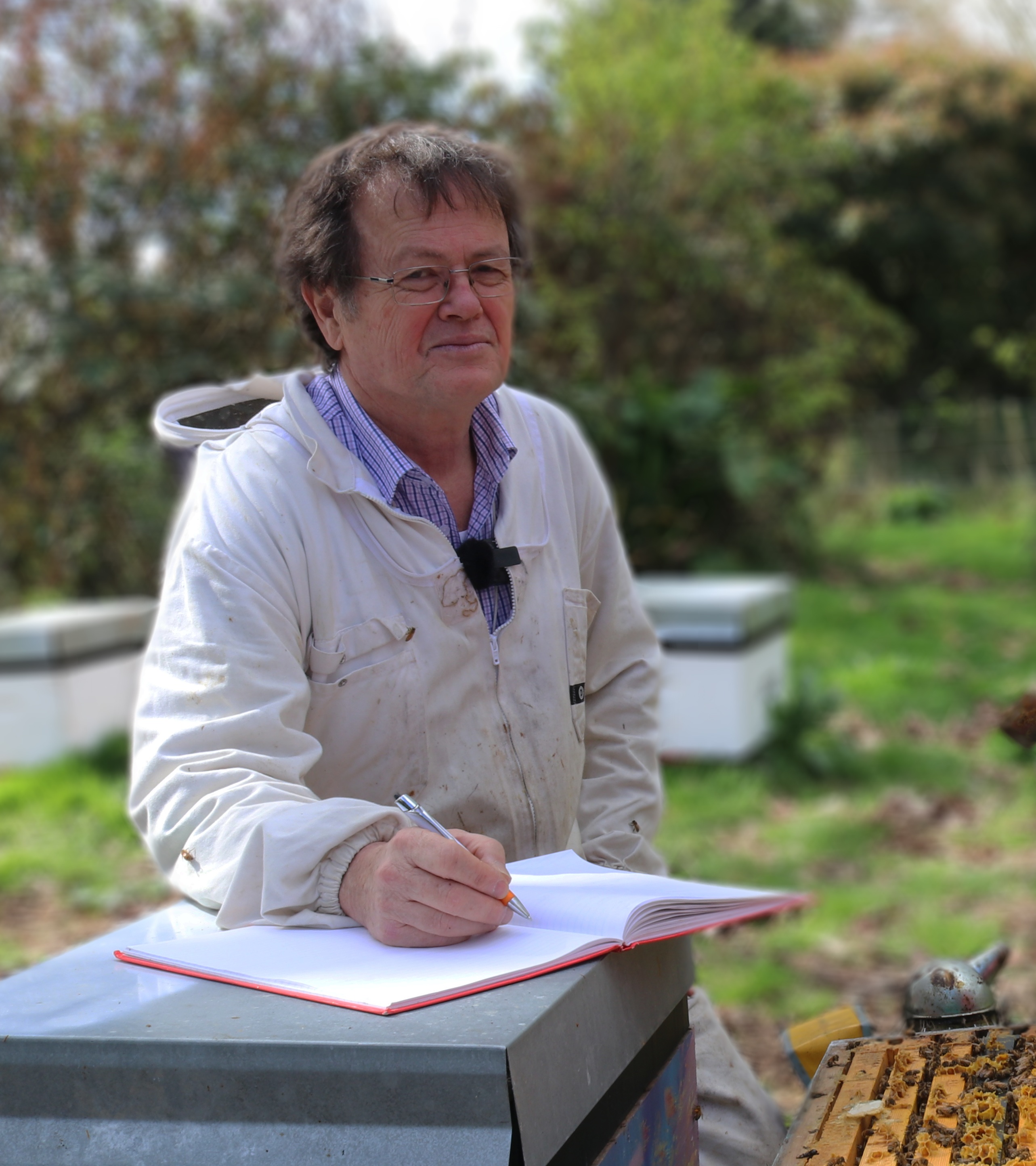
THE SCIENTIFIC BEEKEEPER: Dr R. MARK GOODWIN
We might sometimes overlook it due to its abundance in the environment, but the role of water is essential to a healthy honeybee colony, both for nutritional and temperature-control purposes. Dr Mark Goodwin shares what he has learned about honeybees’ association with water, and how beekeepers can help make it more accessible to their colonies.
By Mark Goodwin
We live in an environment where water seems everywhere, and as beekeepers we don't pay much attention to it. Bees need to collect water to dilute the nectar and honey they feed to larvae. Nectar may have 40% sugar and honey 85% sugar, but this needs to be diluted with water until it is about 4% sugar before it can be fed to worker larvae. Therefore, without water, bees cannot rear brood. Water is also collected and spread on hive surfaces to cool the hive as it evaporates, known as evaporative cooling.

Have you ever wondered why bees seem to prefer ‘dirty’, or at least not ‘clean’ water? Bees use scent to communicate the location of a food source to other bees and it is likely one of the reasons why flowers are scented. This system does not work for clean water as bees cannot smell it and cannot easily recruit other bees to the water source. This is why bees prefer water that smells, like muddy puddles, chlorinated swimming pools and cow pats.

Watery Observations
During my research programme I got taught a few lessons the hard way about bees and water. I had a project to determine the attractiveness of different sugar syrup concentrations to bees, to help with a risk assessment I was writing on products being imported into New Zealand that contain honey. I trained marked bees to collect sugar syrup from a dish. The sugar concentration was gradually lowered to determine at what concentration the bees would stop foraging. Very surprisingly, I kept lowering the concentration till there was just water, and the bees still collected it. At some point the bees must have changed what they were doing with what they were collecting when they returned to their hive. I had to use a different method to answer the question.

In another trial I was looking at methods of shipping package bees to Canada. I needed to find out how much heat a package would produce. To do this I put ten 1kg packages of bees in an environmental control room. The packages were fed sugar syrup. Unfortunately, the cooling system of the room broke down at the same time as the over temperature alarm. When I went to look at the packages they were mostly dead because it got too hot. Before they died, the bees took the 65% sugar syrup from the feeders and spread it across the mesh on the sides of the cages. There was so much syrup on the mesh that it was dripping on the floor. They had fanned over it to try and get evaporative cooling, as they would do with water. Unfortunately, it did not work for the bees as it is very hard to evaporate water from 65% sugar, and all that the fanning did was to increase temperature in the room much faster, until they killed themselves.
The Kiwifruit Conundrum

My last involvement with water was in kiwifruit orchards where beekeepers had to put hives in cages that had been built over gold kiwifruit crops. Many bees were collecting on the sides of the cages and dying there. The colonies coming out of the cages were much weaker than when they were introduced. I was asked to find out why, and to come up with a solution. The bees on the mesh were unlikely to be lost, as other bees were foraging on the kiwifruit flowers and returning to their hives without getting lost. This was supported by the observation that none of the bees on the sides of the cages were carrying pollen. Growers placed bowls of water underneath the vines and bees were collecting it, but after a very quick count, it was obvious that far too few bees were collecting water. To try and make the water easier to find, I moved some containers into an area where there was a break in the canopy so there was only mesh above them. Very quickly there were thousands of bees visiting these dishes and exposing their nasanov glands to attract more bees. It almost looked like they were robbing honey.

The difference in the attractiveness' of the water was not due to the light intensity under the vines, as bees were freely visiting the kiwifruit flowers that hang under the vines. It was because bees recognise water by the polarisation of the light reflecting from it. Under the vines the light was coming from many directions, and therefore the reflections were not polarised in any particular direction. With just sky and mesh above the dishes the reflected light was polarised, and the bees could recognise the water. The bees collecting on the mesh sides of the cage were likely to be bees that had been looking for water.
What can happen without water was obvious when I was asked to look at some hives on the Golan Heights in Israel/Syria when I was giving some lectures there. The hives that had been put into a crop were not flying at all. The temperature was about 40o C, and the bees would have needed to collect water to use evaporative cooling. As there was no water available the colonies had stopped flying altogether.

What Have We Learned?
The lessons are that bees must have water to collect and they prefer water with a scent. If you don't provide it, they may forage from a neighbours swimming pool. Beekeepers in South Australia must provide water otherwise the bees will compete with stock for water.
The water needs to be in the open, rather than in a shaded area, or the bees may not be able to find it. The closer the water is to the hives, the less energy a colony will need to use to collect it. Putting hives on ridges and expecting the bees to collect water from a stream in a valley will work, but will likely reduce honey production because the bees will have to use much more energy to collect the water.
Mark Goodwin is a honey bee scientist and pollination biologist. He set up and led the honeybee research team at Ruakura in Hamilton for 35 years and has vast experience in beekeeping, having given lectures and worked with beekeepers and growers in 19 different countries, written 25 scientific papers, hundreds of technical articles and some of New Zealand beekeeping’s most instructive books.


Comments